

The Disciplined Entrepreneurship Toolbox
Stay ahead by using the 24 steps together with your team, mentors, and investors.

The books
This methodology with 24 steps and 15 tactics was created at MIT to help you translate your technology or idea into innovative new products. The books were designed for first-time and repeat entrepreneurs so that they can build great ventures.
As Bill announced a few weeks ago, there’s a new DE book coming out! I’ve spent the last 18 months working with an extremely knowledgeable and talented team (and also Bill) to write Disciplined Entrepreneurship for Climate Energy Ventures. To my knowledge, our book is the first how-to entrepreneurship book that’s tailored specifically to the unique journey of building climate and energy ventures. Throughout the process, the most common question we’ve received has been the following: Why do climate and energy ventures need their own book?
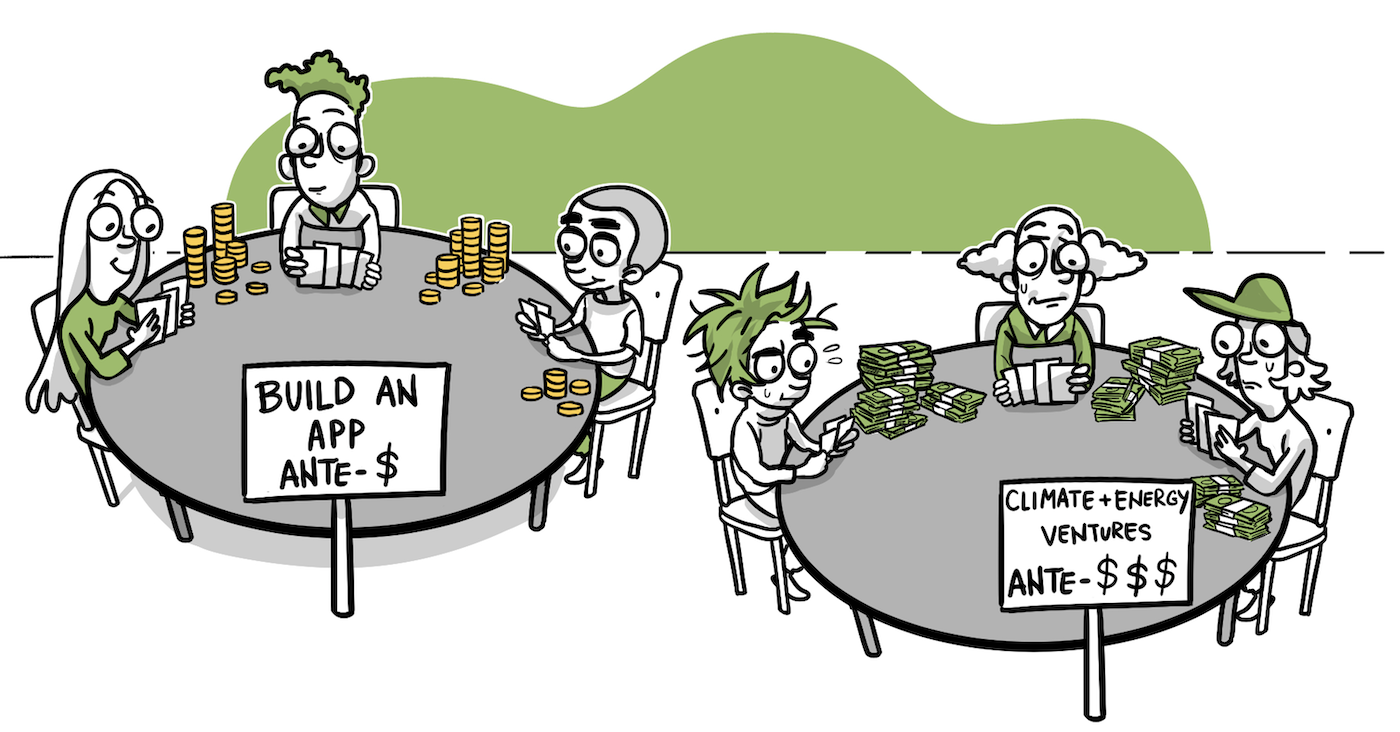
There are many reasons why, and we cover them extensively in the book, but it’s worth digging into one of the biggest ones. Climate and energy ventures require an extremely large amount of time and money to reach scale. Bill has a knack for coming up with pithy and insightful turns of phrase, and he dubbed this dynamic the “high price of poker.” There’s a certain cost to get started with a new venture, in terms of establishing basic technological viability and then eventually building and deploying a sellable product. This cost is like an ante in poker. For many software ventures, this ante is low, and AI is only making it lower. However, climate and energy ventures often seek to commercialize complex physical technology by building solutions at infrastructure scale, which ups the ante for them. Even the latest advances in AI can’t do much to lower it, because success depends on building large physical products and navigating slow-moving institutions. As a result, they need to make each move more thoughtfully and intentionally, including the decision of whether to play at all.
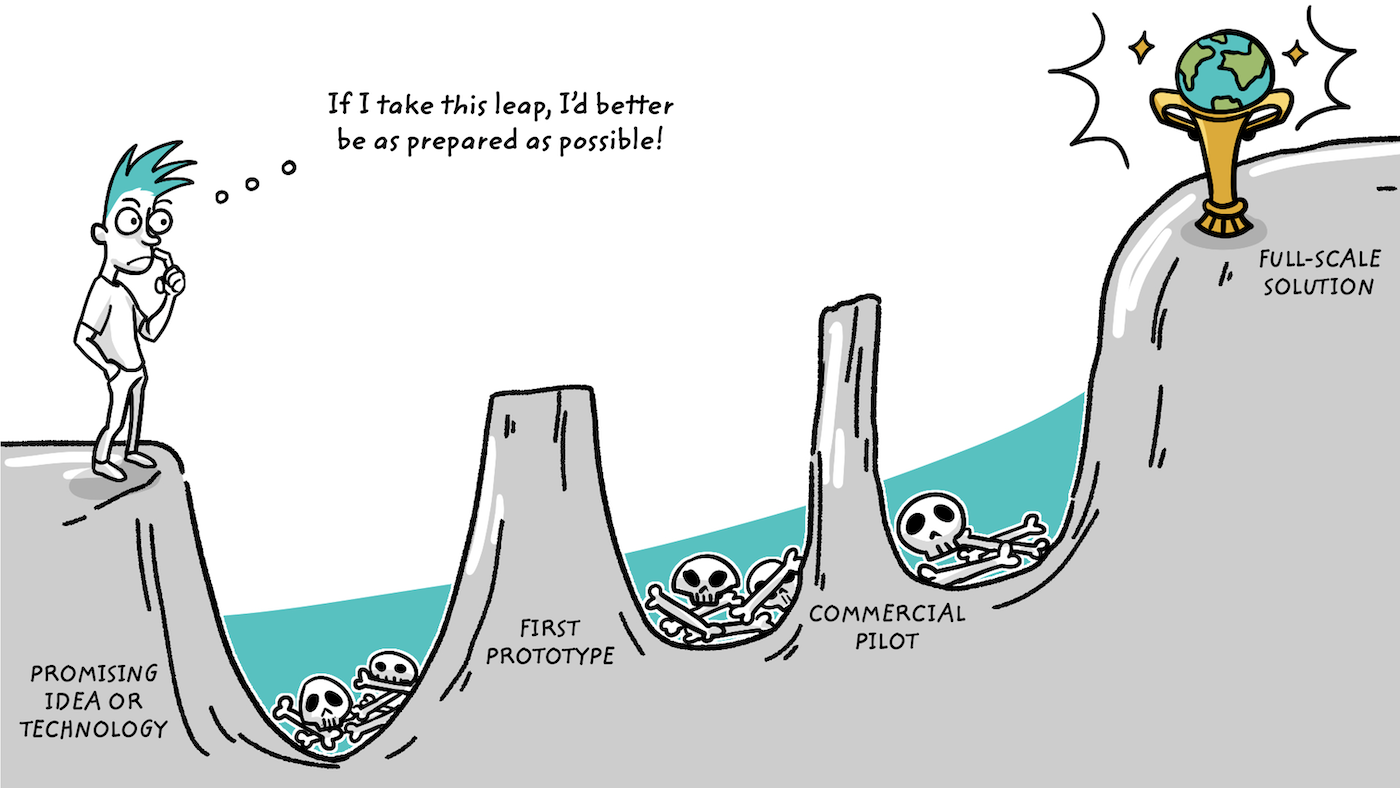
Another evocative image that’s often used to describe this situation is the valley of death, which is a metaphor for how promising technologies often fail to reach scale because they cannot overcome the challenges of financing and deployment. In practice, climate and energy ventures usually face multiple valleys of death because each stage of technology development and commercialization requires a step change in the amount of time, money, and customer traction necessary to proceed. Going back to our poker analogy, not only is the price of poker high but it gets higher each round, making it harder and harder to ante up. It’s also easier and easier to fold, hence the valleys of death.
It might help to make these concepts tangible with some examples. I’ll start with an example where the price of poker is low. Let’s say you’re building a new software, like an app to connect party clowns with parents who are hosting birthday parties for their children. Great! You’re bringing joy and laughter to the world. Once you know who you’re building for and what they want, you could probably create a simple version of the product in a few weeks using traditional methods of software development. With the latest AI tools, you could probably whip something up in just a few hours. If you launch that product and it fails, no sweat. You can iterate quickly. Maybe you need to build a new product with different features. Easy. Or maybe you need to find a different customer. For instance, you realize it would be more lucrative to connect adult party planners with adult entertainment. Sure, why not! It will take time and energy for you to understand these new customers, but once you do, you can quickly build something simple to meet their needs.
Now, let’s say you’ve developed a novel way to store electricity for many hours at a time. You still need to understand your customers and how they operate. They are most likely part of a large organization working within a highly complex value chain and dealing with substantial regulatory hurdles. Fine. But even once you understand who you’re building for and what they want, there is no way to build your product quickly and easily. You first need to show that your method works in the lab, then you need to show that it works on-site with your customers, and then you need to source the materials (electrolytes, anode, cathode, etc.) and develop the manufacturing process, so that you can repeatedly build the product at cost and at scale. That’s the high price of poker. If you go through all that effort and expense, and your solution doesn’t work for some reason, then you probably won’t have another shot. You won’t be able to turn around, develop a new product, or find a new customer. You’ve already blown through all your chips.
These are major challenges, but they are surmountable. Climate and energy ventures must take a strategic approach, which often includes careful choice of experiments as well as working with big corporations and governments to help speed things up. And the benefits on the other side are enormous: huge markets for essential products and services that can benefit both people and the planet.
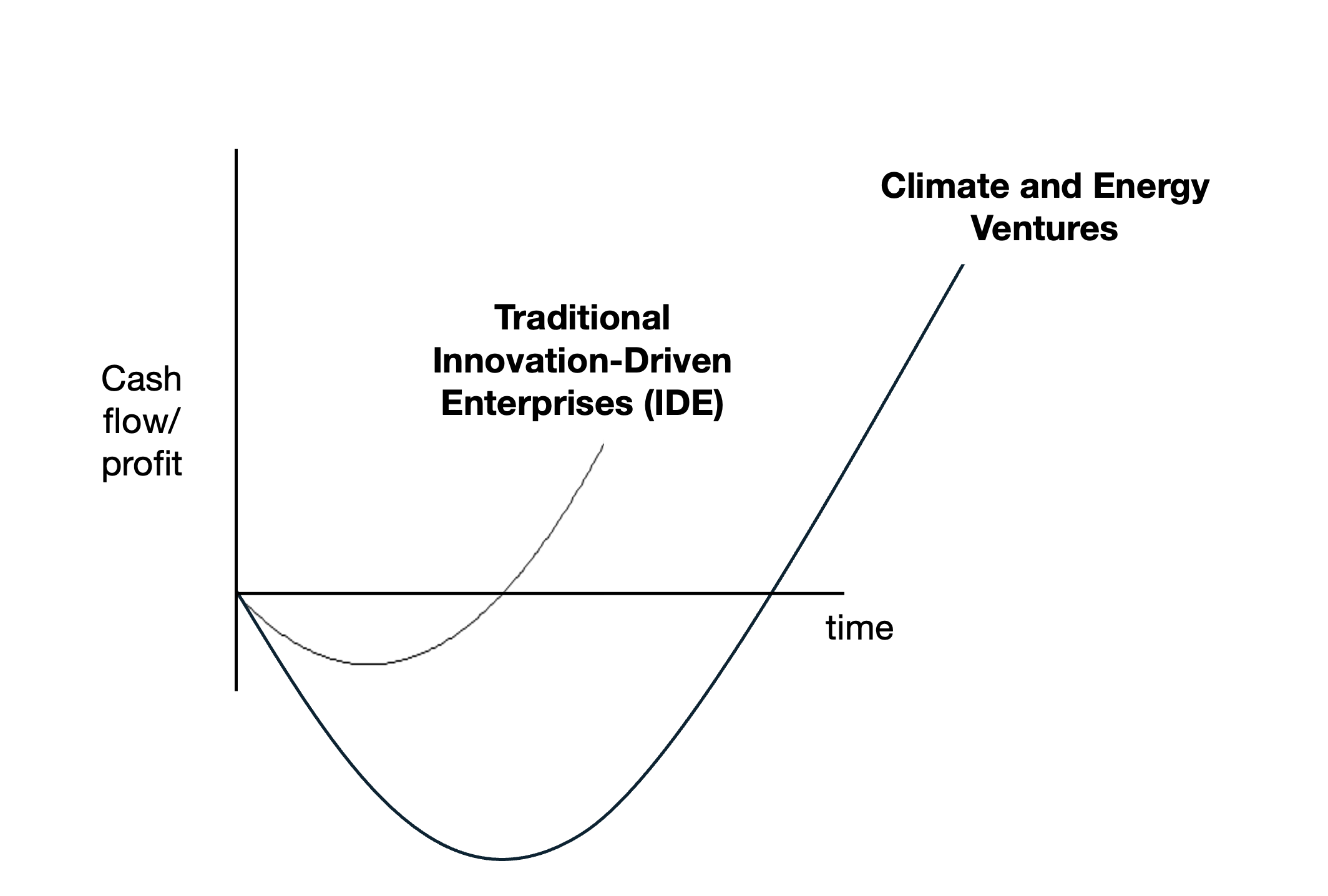
Climate and energy ventures can win, and they can win big, but only if they follow a unique playbook that differs from that of the software ventures that have been Silicon Valley darlings over the past few decades. This playbook is well known by operators and investors in the space, but it has never been recorded in one comprehensive volume… until now. That’s what we’ve sought to do in Disciplined Entrepreneurship for Climate Energy Ventures, and we think we’ve done a pretty good job. We’re not alone in that assessment, since we have a growing list of endorsements from startup founders, investors, educators, ecosystem builders, and other leaders in the space.
Pre-order the book today on Amazon, Barnes & Noble, and Wiley, and stay tuned for more updates and insights!