Step 15
Business Model
The business model is an important decision that you should spend time focusing on.
The decisions you make here will have a significant impact on your profitability, as measured by two key entrepreneurship variables: the Lifetime Value of an Acquired Customer (LTV) and Cost of Customer Acquisition (COCA). Do not focus on pricing in this step, as that follows your decision of business model and will be addressed in Step 16.
Once you have established a Business Model, it is possible but generally not easy to change to a different model. Therefore, choose a Business Model that distinguishes you from competitors and gives you an advantage over them, because they cannot easily change their Business Model to match yours.
Videos
Worksheets
Examples
Content will be published as it becomes available.
Topics
Process Guide
The business model is your framework by which some fraction of the value you create for your customer gets paid back to your startup. It is important to understand that a business model is not pricing. You will get to pricing in the next step, but you first must determine the way in which you will get paid and from whom.
The choice of a business model is a fundamental decision that entrepreneurs often make quickly with little thought but that will not happen here.
Step 15 listed 17 common business models but as mentioned with Amie Street, don’t feel limited by them. You will now consider which to choose in a structured process using the worksheets below.
How should you think about what business model is right for you? There are four major areas to consider when making the decision:
- Value Creation
Revisit Step 8, Quantify the Value Proposition. How much value does your customer get? When do they get it? What is the risk that they won’t get as much value as they thought?
- Customer
- Revisit Step 12, Determine the Customer’s Decision-Making Unit (DMU), and Step 13, Map the Process to Acquire a Paying Customer. What is the DMU and the process? What does that analysis tell you?
- Who gets the value? When? What is their capacity to pay?
- Does the economic buyer favor one-time charges (called “capital budgets” in business) or smaller ongoing charges (called “operating budget” in business)?
- What are the current standards and habits the customers have, and how entrenched are those habits?
- Are there any showstoppers in the DMU or process that you have to be especially aware of? Examples of showstoppers may include reimbursement or purchase authorization limits, standards, regulatory limits, onerous purchasing processes if certain choices are made, etc.
- Competition
- What business models do your competitors have?
- How entrenched are your competitors?
- Could you gain a competitive advantage with your target customer by using a different business model than your competitors use?
- Could your competitors respond to that? How difficult would it be for them to do so?
- Internal Sales, Profitability, and Operations
- Will the business model decrease or increase friction in the sales process, thereby increasing your COCA? (More on this topic in Step 18, Map the Sales Process to Acquire a Customer, and Step 19, Estimate the Cost of Customer Acquisition (COCA).)
- How do you optimize how much value you get from an individual customer over the length of time they are a customer with you? (More on this topic in Step 17, Estimate the Lifetime Value (LTV) of an Acquired Customer.)
- If you will be dependent on distributors, will this model work for your distributors?
- What will be the operational considerations to implement this business model? In systems? In billing? In the receivables area? Customer support? Elsewhere?
- What kind of access to capital do you have? How will this business model affect your access?
Two final notes:
- First, business models are not easy to change once you commit to one, so think through your decision carefully before you lock into a business model.
- Second, think about what “unit” of product you charge for, because the choice of units can set your startup’s business model apart. For instance, consider that commercial real estate companies have traditionally charged on the basis of square feet used. Innovators in the real estate industry like CIC (Cambridge Innovation Center) and WeWork started to charge based on a per-employee basis or a per-desk basis and it gave them a huge (albeit temporary) competitive advantage that was fundamental to their success. Or consider a project some of my students are working on where they make robots that cook food, Spyce Kitchen (since sold to Sweetgreen). What should the units be? They can choose to sell the robots, or they can use the robots to make prepackaged meals and sell to retail stores on a per-meal basis, or they could open a restaurant and sell per meal, or charge a flat fee like at a buffet. The choice of units is an important factor in your business model.
Selecting the business model is not an easy step, but it gives you a strong foundation to make good decisions by exploring the theme of “how do you make money off your product.”
Books
Content will be published as it becomes available.
Other Resources
Content will be published as it becomes available.
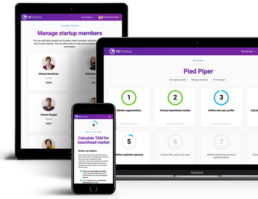
The Disciplined Entrepreneurship Toolbox
Stay ahead by using the 24 steps together with your team, mentors, and investors.
The books
This methodology with 24 steps and 15 tactics was created at MIT to help you translate your technology or idea into innovative new products. The books were designed for first-time and repeat entrepreneurs so that they can build great ventures.